Company

Security & AI Governance

Make controls part of the workflow design, from the first data connection to the final human decision.

Controls belong in the workflow

Useful AI. People in control.

Set the boundaries, make decisions reviewable and give the right people a way to act.

Who this is for

Technology owners, security reviewers and operational decision makers

Boundaries you can test. Decisions you can trace.

A reviewable path from input to action

People stay in the loop.

  1. Approved
    inputs
  2. Scoped
    actions
  3. Human
    review

Designed into the work

Clear boundaries.
Confident next steps.

Define access

The right information, for the right task.

Check the evidence

Test real examples and difficult cases.

Keep oversight

Clear approvals and human escalation.

Prepare to operate

Monitoring, recovery and named owners.

Access with a defined purpose

Identify the data a workflow needs, who may use it and the systems it may change. Agree access boundaries, retention rules and credential ownership.

Evaluate before expanding

Use representative examples to review grounding, accuracy, failure modes and correction effort. Set acceptance criteria appropriate to the task.

Keep consequential decisions reviewable

Define approval steps, exception queues and escalation owners. Maintain the evidence needed to understand and challenge a system output.

Prepare for operational ownership

Agree logs, monitoring, release checks, rollback paths and incident responsibilities. Specific contractual and regulatory requirements are reviewed during discovery.

From the first design decision

Set the boundaries.
Keep learning.

  1. 01

    Map the risk

    Understand the data, actions and people involved.

  2. 02

    Design the controls

    Agree permissions, approvals and review boundaries.

  3. 03

    Test the behaviour

    Check realistic scenarios against agreed criteria.

  4. 04

    Review in operation

    Keep owners, recovery and improvements connected.

Controls in project context

Governance in
the workflow.

Explore all work
ProcureOS AI — AI concept visualization · project scope

AI concept visualization · project scope

ProcureOS AIPrototype

Approval boundaries

A person approves the next action.

ProcureOS AI pauses for an explicit decision before preparing a purchase-order draft.

  • Human approval
  • Recorded decision
  • PO draft after approval
Explore the scope & development stage
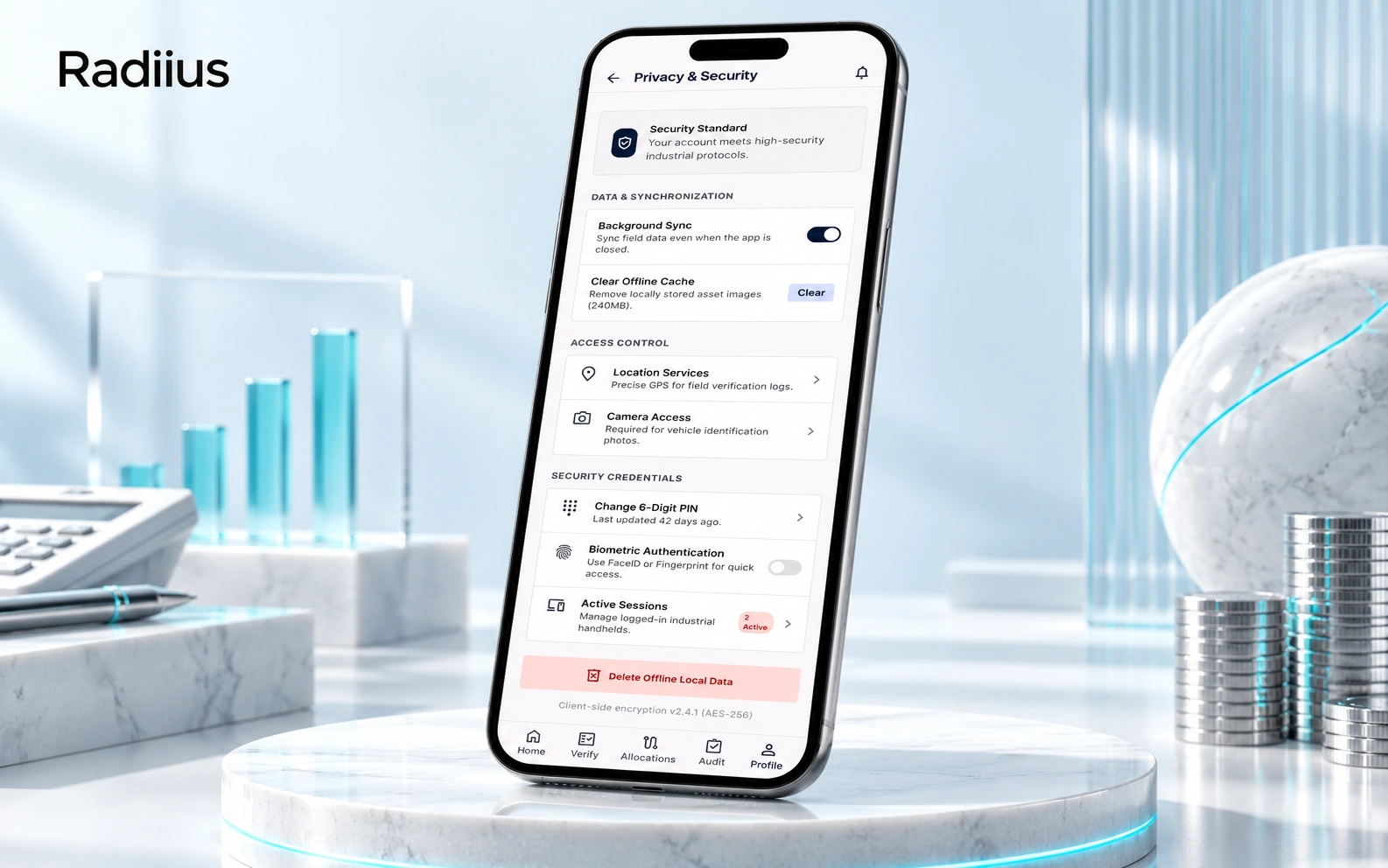
Radiius — AI presentation artwork · design reference

AI presentation artwork · design reference

RadiiusPre-production

Access & traceability

Keep the operating trail visible.

Radiius connects role-scoped access, timestamped follow-ups and operational audit records.

  • Role-scoped access
  • Timestamped activity
  • Audit history
Explore the scope & development stage

Project profiles explain their implementation scope and development stage. These examples illustrate governance patterns; independent security assurance is assessed separately.

What takes shape

Controls you
can review.

Testable access and data boundaries

Map roles to records and actions. Review authentication, least-privilege access, session behaviour and how sensitive data appears in logs and exports.

Risk and remediation review records

Test untrusted inputs, forged requests, unexpected tool output and repeated actions. Agree rate limits, safe defaults and escalation ownership.

Security and recovery acceptance checks

Review deployment configuration, secrets handling, backups, logging and incident contacts. Exercise recovery before a service depends on the new workflow.

How we review the result
  • Control coverage against agreed risks
  • Unauthorised-action rejection and audit completeness
  • Recovery readiness and unresolved remediation ownership

Application examples demonstrate relevant design considerations, not independent security certification, a penetration-test result or a compliance guarantee.

Prepare for a useful conversation

Bring the context.
We’ll help shape the brief.

The environment & the risks

  • Role and data-flow maps
  • Critical assets and abuse scenarios
  • Existing controls and known gaps
  • Release and incident responsibilities

The working environment

  • Identity and authorisation systems
  • Application and infrastructure logs
  • Approved monitoring and incident tools
Readiness checklist

Representative source material

Prepare role and data-flow maps and critical assets and abuse scenarios. Start with approved or synthetic examples and identify gaps before introducing live records.

The right people in the room

Involve technology owners, security reviewers and operational decision makers. Identify who can confirm the workflow, review an exception and accept a release.

An agreed evaluation baseline

Define how you will assess control coverage against agreed risks. Record the current process and include difficult cases in the review set.

A few things
worth knowing.

Do you claim a security certification?

No certification or independent assurance report is claimed on this page. Ask for the evidence relevant to your procurement review and proposed engagement.

Can sensitive data be used during discovery?

Begin with synthetic or approved examples where possible. Classify the data and agree permitted access, processing, storage and retention before sharing live records.

Will AI make decisions without review?

The review boundary depends on the task and its consequences. Permissions, approval steps and escalation owners are agreed explicitly; high-impact actions need appropriate oversight.

Can you support our security review?

Share the questionnaire, architecture constraints and applicable contractual requirements. We can discuss the proposed controls and the evidence that can be provided for that scope.

The next useful step

Build the controls into the conversation.

Discuss your requirements