
Mobile Engineering
Create mobile experiences for customers, employees and field teams that fit the way they work.
Built around your operating context
Mobile product owners, field teams and application engineers
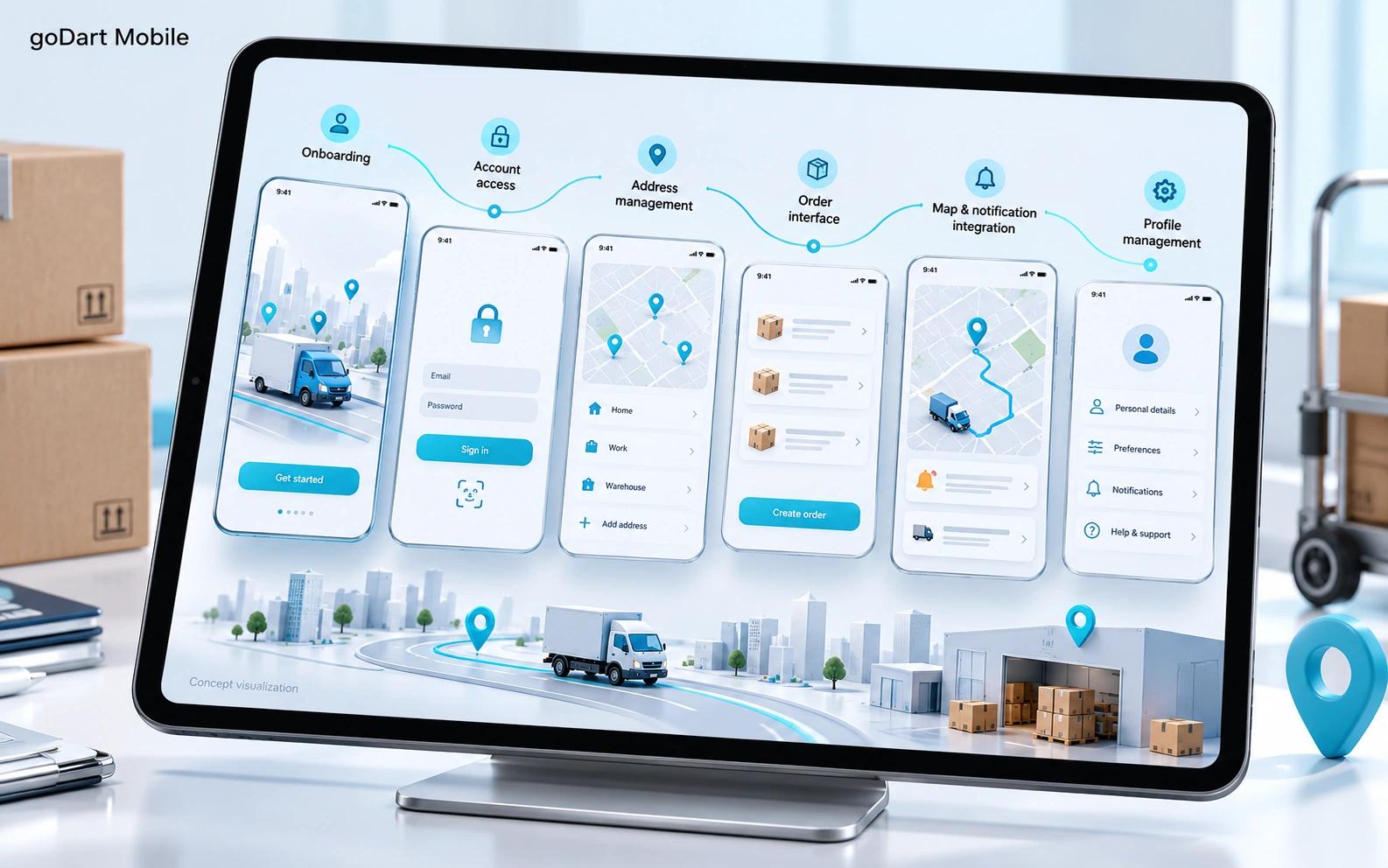
Mobile application · AI concept visualization · project scope
goDart Mobile
Mobile onboarding · Account access · Address management
Mobile experiences and connected services
Make the essential task work wherever people are.
Onboarding and access
Connect account creation, verification and session recovery.
Explore the approach
Connect account creation, verification and session recovery. Test interrupted sign-in and device changes alongside the ideal first-run experience.
Device capabilities
Request only the permissions the task needs.
Explore the approach
Request only the permissions the task needs. Explain why access is required and provide useful behaviour when notifications, audio or another device capability is unavailable.
Connected workflows
Keep the app and backend consistent when connectivity changes.
Explore the approach
Keep the app and backend consistent when connectivity changes. Define loading, retries, duplicate prevention and the point at which a task is confirmed.
Choose what your project needs
A clear scope.
A useful result.
Our approach
Map the essential device tasks, connectivity limits and accessibility needs. Choose native or cross-platform development around those requirements.
Native mobile technologies
Select technologies according to the product constraints, integration requirements and the team that will maintain the system.
Swift
Plan native Apple-platform journeys around device capabilities and accessibility. Agree API contracts, release ownership and supported operating-system versions.
Kotlin
Design Android journeys around the devices, permissions and connectivity the workflow needs. Include field conditions and release testing in the implementation scope.
Wearable and Smart Devices
Begin with a small, useful device interaction and its connection to the wider product. Assess battery, privacy, connectivity and user-input constraints.
Cross-platform technologies
Select technologies according to the product constraints, integration requirements and the team that will maintain the system.
Flutter
Use a shared application layer where consistent cross-platform journeys are valuable. Verify platform-specific integrations and the devices used by the intended audience.
React Native
Connect shared mobile journeys to native device capabilities and business APIs. Agree library support, testing coverage and long-term release ownership.
From first release to ongoing improvement
Agree acceptance criteria, test the critical user journeys and document the release and support path.
In project context
The work behind the possibilities.
AI concept visualization · project scope
Logistics · Mobile application
goDart Mobile
Mobile onboarding · Account access · Address management
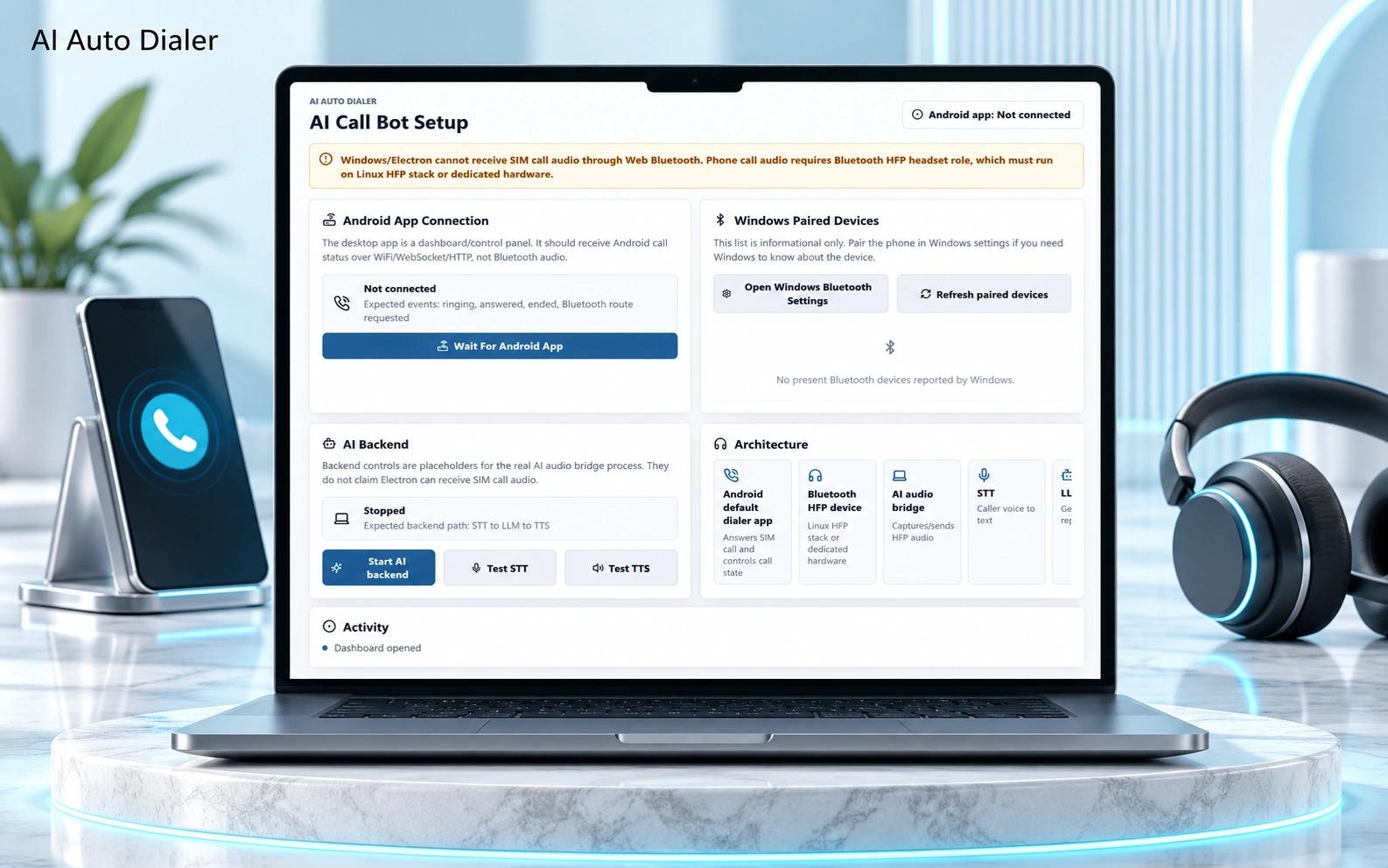
AI presentation artwork · screen reference
Telephony · MVP
AI Auto Dialer
Android call-answering interface · Bluetooth routing request · Desktop device dashboard
Each project has its own scope and stage. Explore the profile for implementation details.
The path from idea to operation
Start focused.
Build with clarity.
- 01
Explore
- 02
Prototype
- 03
Build
- 04
Release
Deliverables & evaluation
What takes shape
Complete mobile interaction flows
Connect account creation, verification and session recovery. Test interrupted sign-in and device changes alongside the ideal first-run experience.
Connected API and account journeys
Request only the permissions the task needs. Explain why access is required and provide useful behaviour when notifications, audio or another device capability is unavailable.
Device, recovery and release acceptance checks
Keep the app and backend consistent when connectivity changes. Define loading, retries, duplicate prevention and the point at which a task is confirmed.
Know what good looks like
- Critical journey completion on agreed devices
- Permission-denial and interrupted-session recovery
- Crash behaviour, responsiveness and API reliability
Device, operating-system and store requirements affect the release scope. A source-level mobile feature does not establish store approval or compatibility with every device.
Bring the context. We’ll shape the next step.
From your world.
Into a working plan.
Source material
- Core mobile user journeys
- Target devices and operating systems
- Permission and offline requirements
- Backend and account-access contracts
Systems to connect
- Mobile platform capabilities
- Identity and application APIs
- Approved notification and device services
Useful outputs
- Complete mobile interaction flows
- Connected API and account journeys
- Device, recovery and release acceptance checks
Readiness checklist
Representative source material
Prepare core mobile user journeys and target devices and operating systems. Start with approved or synthetic examples and identify gaps before introducing live records.
The right people in the room
Involve mobile product owners, field teams and application engineers. Identify who can confirm the workflow, review an exception and accept a release.
An agreed evaluation baseline
Define how you will assess critical journey completion on agreed devices. Record the current process and include difficult cases in the review set.
Good questions.
Clear answers.
What should we bring to a first conversation?
Bring core mobile user journeys, target devices and operating systems, permission and offline requirements, backend and account-access contracts. Include a person who knows the current process and can explain the difficult cases. An outline or synthetic example is sufficient for the first conversation.
What would the first release include?
Agree one bounded journey during discovery. A possible first output is complete mobile interaction flows, supported by a clear review owner and acceptance examples. Connected API and account journeys and Device, recovery and release acceptance checks can be scoped where the operating case supports them.
Can this work with our existing systems?
We first review the available interfaces and access rules for mobile platform capabilities, identity and application apis, approved notification and device services. An initial engagement can use approved exports where a direct integration is unavailable. Live updates require an agreed permission model and recovery path.
The next useful step