Complete user journeys
Connect onboarding, the core task and follow-up in a coherent experience. Include loading, empty, error and recovery states across devices and assistive technology.

Take a new product or business workflow from a clear brief to a usable first release.
The work, in detail
Identify the users, the task they need to complete and the smallest scope that provides a useful result.
Use working increments, acceptance criteria and regular demonstrations to keep decisions connected to real usage.
Use discovery and workflow mapping within the agreed scope of new development. Define the responsible owner, the relevant source records and the checks that make the output useful.
Use design, architecture and implementation within the agreed scope of new development. Define the responsible owner, the relevant source records and the checks that make the output useful.
Use testing, release and handover within the agreed scope of new development. Define the responsible owner, the relevant source records and the checks that make the output useful.
Agree documentation, support responsibilities and the next set of improvements before launch.
What takes shape
Final scope is agreed after discovery. These are the working outputs we can shape around your context.
Connect onboarding, the core task and follow-up in a coherent experience. Include loading, empty, error and recovery states across devices and assistive technology.
Define entities, validation and API boundaries before expanding features. Plan migrations, duplicate handling and backwards compatibility with existing consumers.
Create a repeatable delivery path with environment separation, observability and rollback. Hand over runbooks alongside working software.
A connected delivery path
Prepare for a useful conversation
Prepare complete user journeys and data and integration contracts. Start with approved or synthetic examples and identify gaps before introducing live records.
Involve product owners, business teams and application engineers. Identify who can confirm the workflow, review an exception and accept a release.
Define how you will assess completion of critical journeys and recovery paths. Record the current process and include difficult cases in the review set.
Products and platform engineering
A reliable product connects interfaces, data, permissions and operations. Shape delivery around complete user journeys and the failure cases that occur outside a polished demonstration.
Connect onboarding, the core task and follow-up in a coherent experience. Include loading, empty, error and recovery states across devices and assistive technology.
Define entities, validation and API boundaries before expanding features. Plan migrations, duplicate handling and backwards compatibility with existing consumers.
Create a repeatable delivery path with environment separation, observability and rollback. Hand over runbooks alongside working software.
Define success before delivery
Choose a representative sample, record the current baseline and agree who accepts the result. These are evaluation criteria to discuss, rather than promised outcomes.
Completion of critical journeys and recovery paths
Reliability, accessibility and performance budgets
Release repeatability and operational ownership
A prototype demonstrates an interaction or architecture; it is not automatically production-ready. Security, scale, integration and operational acceptance need their own evidence.
From the project library
Explore the product patterns and operating context relevant to new development. Each profile explains its own scope and stage; adjacent examples do not imply the same solution has already been delivered.
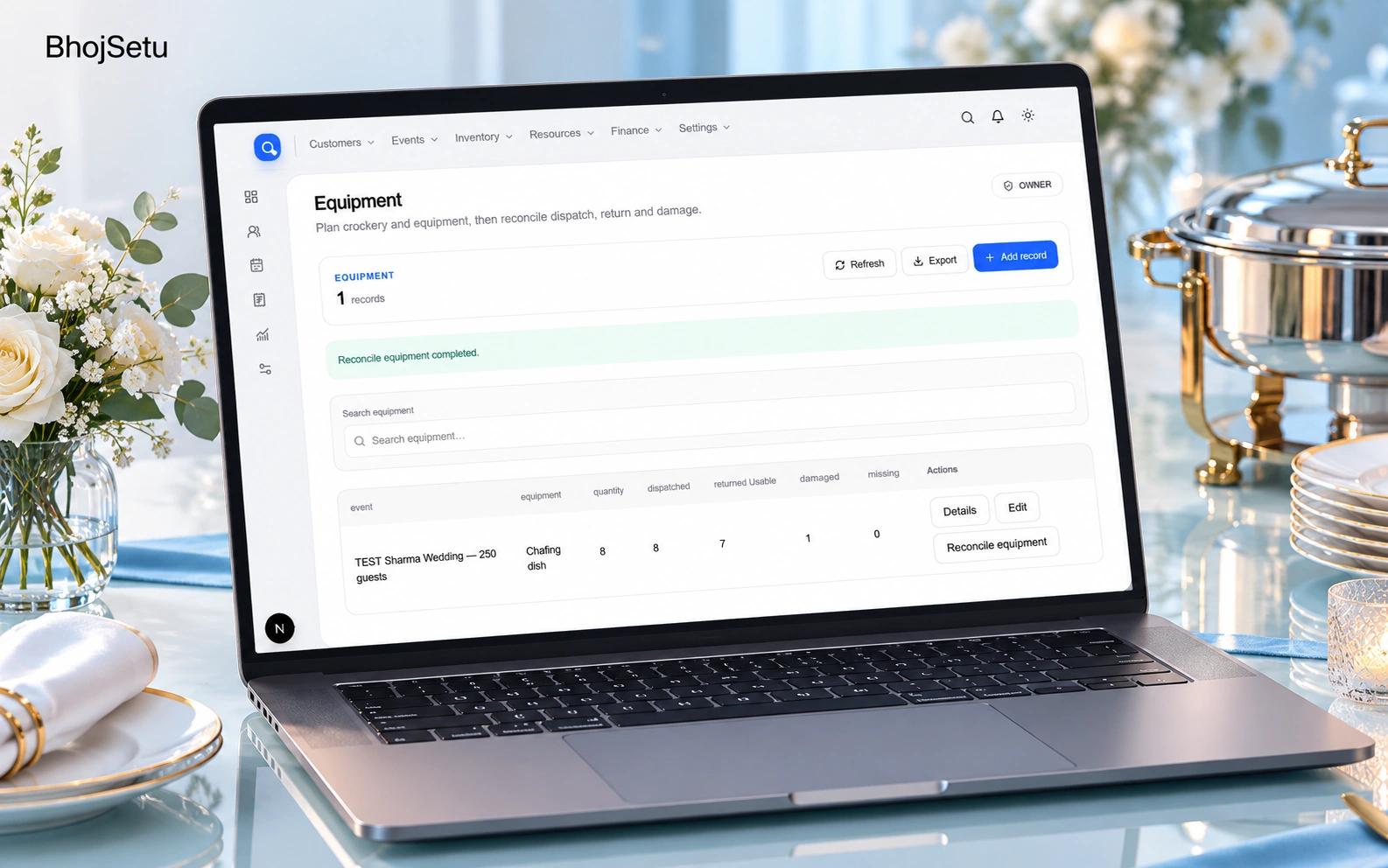
Pilot · AI presentation artwork · screen reference
A connected catering workspace brings bookings, menus, recipe scaling, procurement, workers, equipment and billing into one flow.
Catering teams repeat event, menu, quantity and payment data across disconnected operational steps.

Prototype · AI presentation artwork · screen reference
A static product preview combines a production-resource directory with a project dashboard for shoot operations.
Production teams coordinate resource discovery, budgets, schedules and communication across disconnected channels.
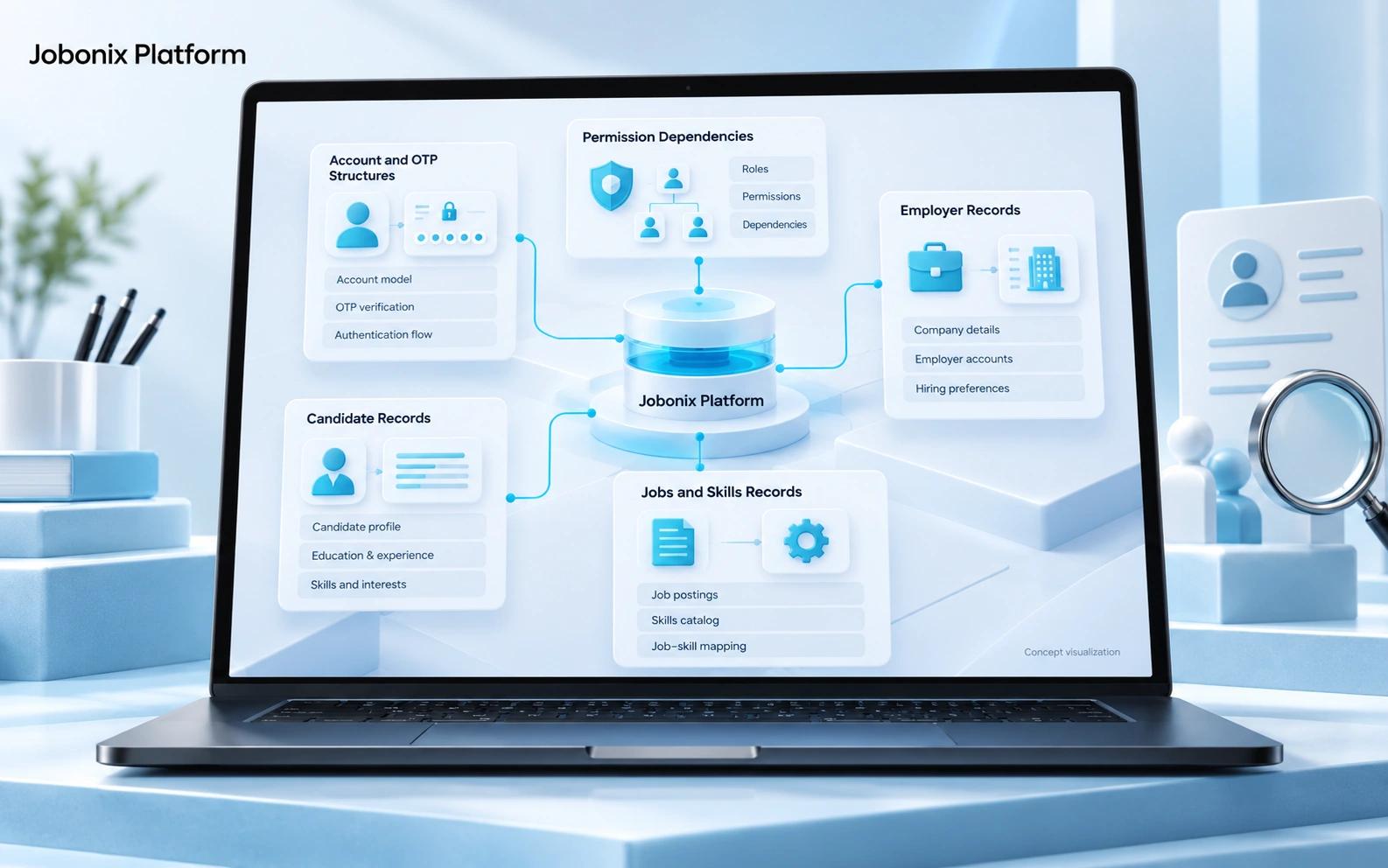
Backend platform · AI concept visualization · project scope
A Laravel backend models employer and job-seeker profiles, job records, skills, education and account access.
A hiring platform needs shared records for employers, candidates, jobs and access permissions.
Project profiles describe their available scope and development stage. Interface captures, documentation and workflow concepts are labelled separately; they are not claims of measured business results.
Before we begin
Bring complete user journeys, data and integration contracts, access and permission rules, release and acceptance requirements. Include a person who knows the current process and can explain the difficult cases. An outline or synthetic example is sufficient for the first conversation.
Agree one bounded journey during discovery. A possible first output is connected application increments, supported by a clear review owner and acceptance examples. Documented data and integration boundaries and Release and operational handover materials can be scoped where the operating case supports them.
We first review the available interfaces and access rules for business and application apis, identity and persistent data systems, approved deployment and monitoring environments. An initial engagement can use approved exports where a direct integration is unavailable. Live updates require an agreed permission model and recovery path.