
Solutions
Finance & Back-Office Automation
Connect reconciliation, reporting and approval work for finance teams.
Finance & Back-Office Automation
Connect reconciliation, reporting and approval work for finance teams.
Built around your operating context
Finance operations, reporting owners and authorised reviewers
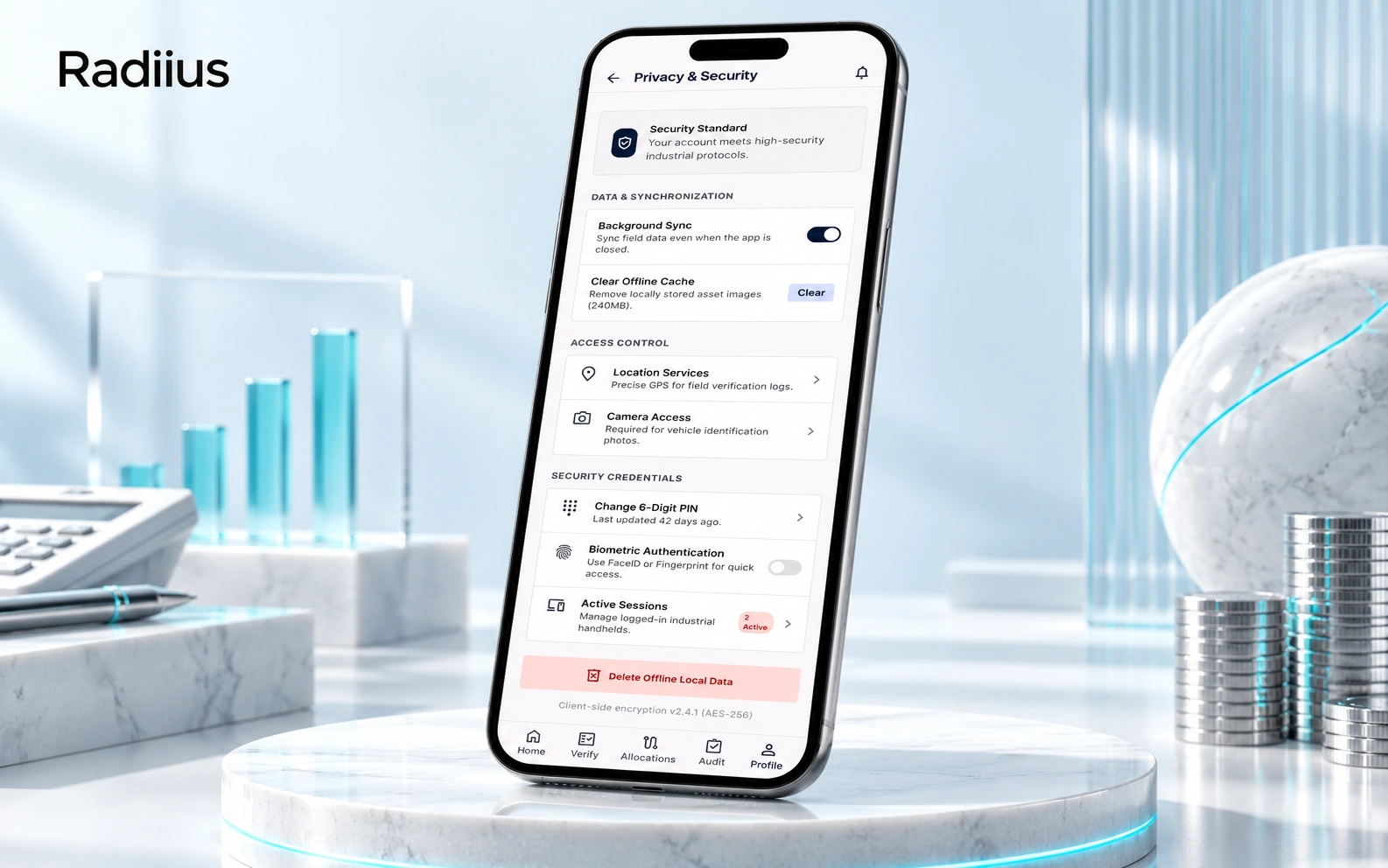
Pre-production · AI presentation artwork · design reference
Radiius
Customer and route assignments · Timestamped follow-ups · Promise and escalation tracking
Finance and controlled operations
Move faster with the evidence intact.
Record reconciliation
Compare approved source records using agreed tolerances.
Explore the approach
Compare approved source records using agreed tolerances. Show the discrepancy and its origin instead of silently resolving an ambiguous entry.
Reporting preparation
Build reporting views from defined periods and reconciled fields.
Explore the approach
Build reporting views from defined periods and reconciled fields. Retain calculation logic, source references and version history for reviewer checks.
Service and follow-up
Coordinate assigned accounts, reminders and case status.
Explore the approach
Coordinate assigned accounts, reminders and case status. Restrict access by role and keep a record of changes to customer or financial information.
Choose what your project needs
A clear scope.
A useful result.
Bring records into context
Connect invoice, receipt and ledger records using shared identifiers and agreed access rules. Make incomplete information visible before review.
Make exceptions actionable
Route mismatches and missing evidence to named reviewers, with links to the records needed to resolve them.
Prepare review-ready reporting
Use approved metrics and templates for draft reports. Finance owners verify calculations, interpretations and distribution before release.
Begin with one finance process
Assess sample records, permissions and acceptance criteria. Payment release, filings and financial sign-off remain with authorized people.
In project context
The work behind the possibilities.
AI presentation artwork · design reference
Finance operations · Pre-production
Radiius
Customer and route assignments · Timestamped follow-ups · Promise and escalation tracking
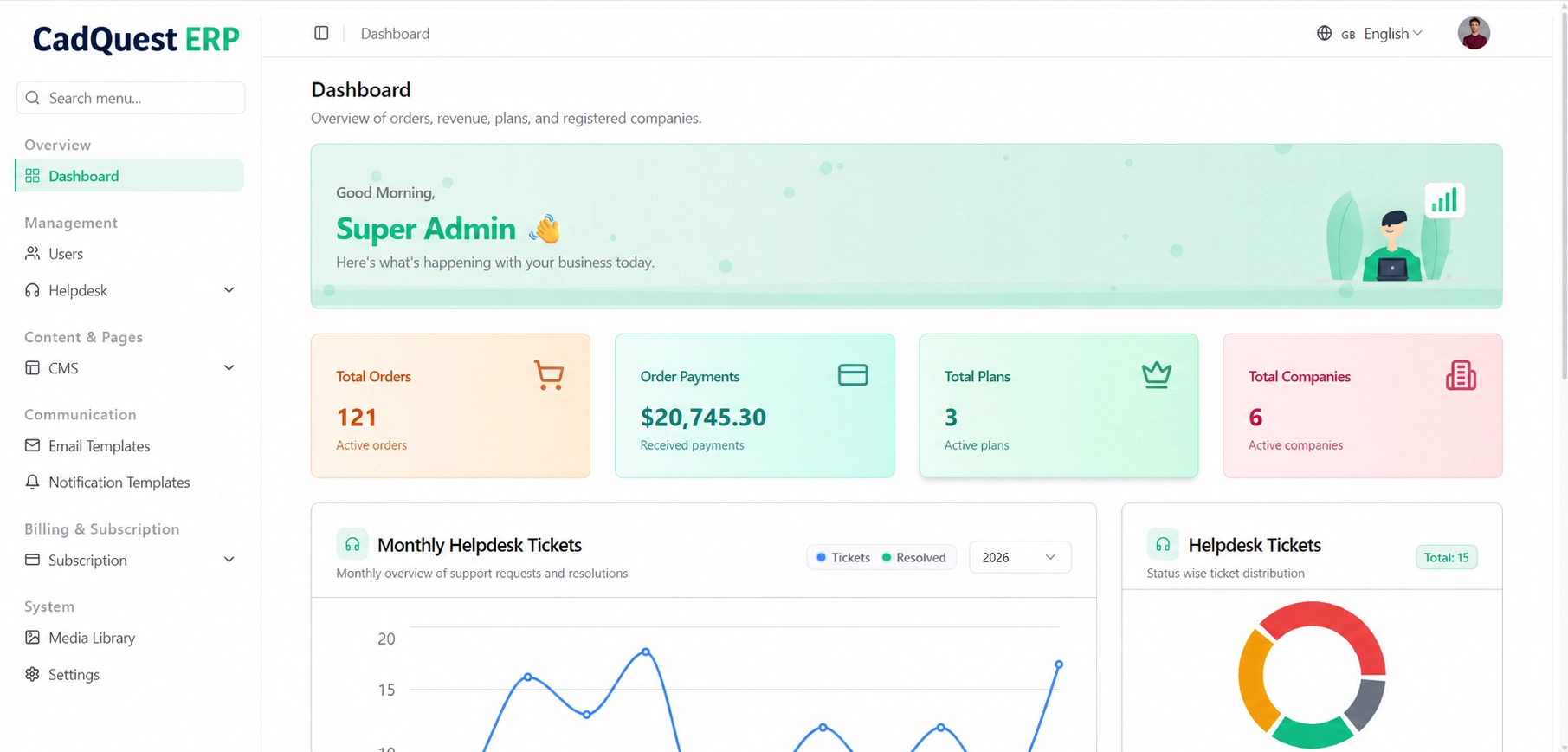
CadQuest ERP · branding-edited preview
Enterprise operations · Application
CadQuest ERP
Accounting and banking modules · Invoices and bills · Employee and attendance records
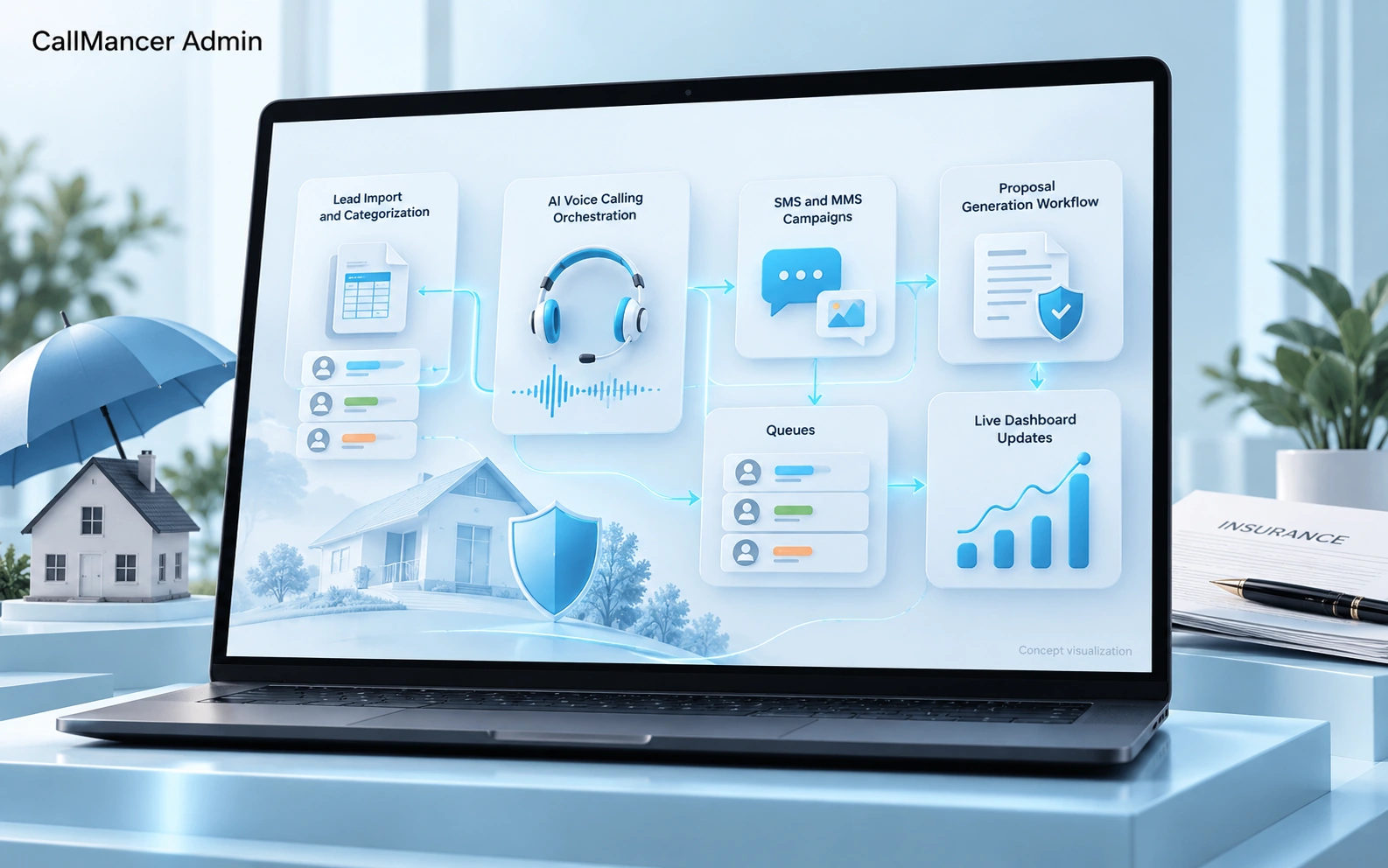
AI concept visualization · project scope
Insurance and sales · Application
CallMancer Admin
Lead import and categorization · AI voice calling orchestration · SMS and MMS campaigns
Each project has its own scope and stage. Explore the profile for implementation details.
The path from idea to operation
Start focused.
Build with clarity.
- 01
Collect
Establish the source records and the intended result.
- 02
Reconcile
Connect the approved sources and apply the task-specific checks.
- 03
Review
Review representative outputs and exceptions with the accountable owner.
- 04
Report
Record the outcome, hand work to the responsible team and retain the information needed to investigate or improve the next run.
Deliverables & evaluation
What takes shape
Reconciliation and exception workspaces
Compare approved source records using agreed tolerances. Show the discrepancy and its origin instead of silently resolving an ambiguous entry.
Traceable reporting preparation
Build reporting views from defined periods and reconciled fields. Retain calculation logic, source references and version history for reviewer checks.
Assigned follow-up and review records
Coordinate assigned accounts, reminders and case status. Restrict access by role and keep a record of changes to customer or financial information.
Know what good looks like
- Reconciliation accuracy and unresolved exceptions
- Source coverage and reproducibility of reports
- Review turnaround and correction effort
Tax filing, financial advice and regulated decisions require qualified review. Automation supports preparation; it does not establish compliance or approval by itself.
Bring the context. We’ll shape the next step.
From your world.
Into a working plan.
Source material
- Reconciled source records
- Reporting periods and calculation rules
- Account and follow-up assignments
- Review and approval responsibilities
Systems to connect
- Accounting and finance interfaces
- Approved document and reporting stores
- Identity and reviewer-access systems
Useful outputs
- Reconciliation and exception workspaces
- Traceable reporting preparation
- Assigned follow-up and review records
Readiness checklist
Representative source material
Prepare reconciled source records and reporting periods and calculation rules. Start with approved or synthetic examples and identify gaps before introducing live records.
The right people in the room
Involve finance operations, reporting owners and authorised reviewers. Identify who can confirm the workflow, review an exception and accept a release.
An agreed evaluation baseline
Define how you will assess reconciliation accuracy and unresolved exceptions. Record the current process and include difficult cases in the review set.
Good questions.
Clear answers.
What should we bring to a first conversation?
Bring reconciled source records, reporting periods and calculation rules, account and follow-up assignments, review and approval responsibilities. Include a person who knows the current process and can explain the difficult cases. An outline or synthetic example is sufficient for the first conversation.
What would the first release include?
Agree one bounded journey during discovery. A possible first output is reconciliation and exception workspaces, supported by a clear review owner and acceptance examples. Traceable reporting preparation and Assigned follow-up and review records can be scoped where the operating case supports them.
Can this work with our existing systems?
We first review the available interfaces and access rules for accounting and finance interfaces, approved document and reporting stores, identity and reviewer-access systems. An initial engagement can use approved exports where a direct integration is unavailable. Live updates require an agreed permission model and recovery path.
How are results and release readiness reviewed?
Agree examples, failure cases and acceptance criteria before the build. Review source traceability, correction effort, access boundaries and the handover into everyday operations. We do not promise a fixed saving or performance figure before that assessment.
The next useful step